Home  |  About Us  |  Social Entrepreneurship Training  |  Social Venture Investment  |  Current Programs  Living Stories Job PositionsContact


Current Programs


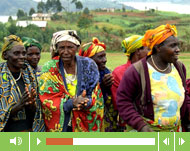
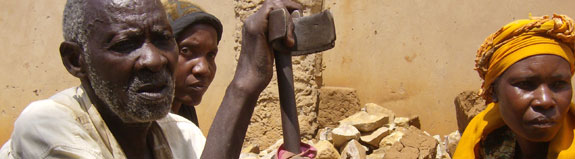
Global Grassroots in Rwanda. Global Grassroots offers its Social Entrepreneurship Training and Social Venture Investment Program to Rwanda to  genocide survivors, notably widows, women with HIV/AIDS and victims of sexual assault. Global Grassroots is filling a unique niche by helping survivors help themselves. Through investment in capacity building, skills training and assistance with the launch of new social ventures, Global Grassroots is investing in a culture of social entrepreneurship that has the potential for changing systematically the way in which communities creatively and sustainably solve the social issues they face. 

Please see our story on our participation in Memorial Services for the 12th Anniversary of the Genocide in April 2006.

Read more about our recent projects
View our photographs


  Women in Rwanda. In 1994, over 800,000 Rwandan citizens were killed within a three-month period in one of the most concentrated acts of genocide in human history. Hundreds of thousands of Rwandan women and girls endured severe acts of sexual and gender-based violence. At the end of the genocide, the government estimated women made up nearly 70 percent of the population, left to assume the traditional roles of men in heading households and rebuilding lives.  Today, the population is still recovering. As of 2003, 52 percent of the population was living on less than $1.00 per day.  Twelve years later and after the return of nearly one million refugees, 36 percent of households are still headed by women, 60 percent of whom have no income or support.
Global Grassroots in Darfur, Sudan. Global Grassroots launched its work in 2005 with refugees who had fled to Chad from Darfur, Sudan, where genocide has displaced approximately 2.5 million and caused the deaths of over 300,000 non-Arabs since early 2003.  Global Grassroots has identified a selection of social ideas generated by refugees for future development, including a peace library, a school cafeteria, a women's market cooperative and a children's multi-media center.  Our program in Chad has been placed temporarily on hold due to the deteriorating security situation and will not resume until we can ensure we can operate safely and sustainably in the region.

Please see our story about our month-long site visit to the refugee camps of eastern Chad, published by Her Circle Ezine, Fall 2006.

View our photographs


  Women in Darfur, Sudan. Women and children unarguably bear the greatest burden of the Darfur conflict. Not only have many women lost their husbands, but rape is also used widely as a violent tool of war. During an attack on a village, girls as young as seven years old have been gang raped by Arab militia men. Even after they relocate to IDP camps, women are forced to leave the camps daily to seek firewood with a high risk of rape, imprisonment or abduction in local and cross-border attacks.  Often women are sexually assaulted even within the supposed safety of the IDP camps.  Frequently rape victims are ostracized, disowned and abandoned by their families, and others face unwanted pregnancies and an even greater burden of care. When women finally are able to return home and rebuild their lives, many will likely be left to support themselves and their unwanted children alone. 

TAKE ACTION NOW

Global Grassroots in South Africa. Prior to Global Grassroots' official launch in 2004, we investigated the impact of HIV/AIDS on the women and children of South Africa and the work of social entrepreneurs addressing the crisis. 

Please see our story on the Topsy Sanctuary, founded by a pair of courageous social entrepreneurs working to provide a life for the AIDS orphans of South Africa.


  Women in South Africa. Women and girls in South Africa and elsewhere in the developing world, due to their poor access to education and training, lower social status and lack of employment, are left with weakened independence and power for negotiating use of a condom or fidelity with men and with little economic ability to leave a dangerous relationship. According to the Joint United Nations Programme on HIV/AIDS:
  • Of all those living with HIV in the world, more than 60% or 25.8 million live in Sub-Saharan Africa.
  • In Sub-Saharan Africa, nearly 60% of people living with HIV are women.
  • As of 2002, approx. 11 million children had been orphaned due to AIDS in Sub-Saharan Africa, representing 80 percent of the world’s AIDS orphans.
  • By the end of 2003 there were 5.3 million South Africans infected with HIV, the largest single population in the world.